Research
My work focuses on robot adaptation for iterative improvement, continual learning, and productive human-robot interactions. Refer to my Google Scholar for an up-to-date list of publications.
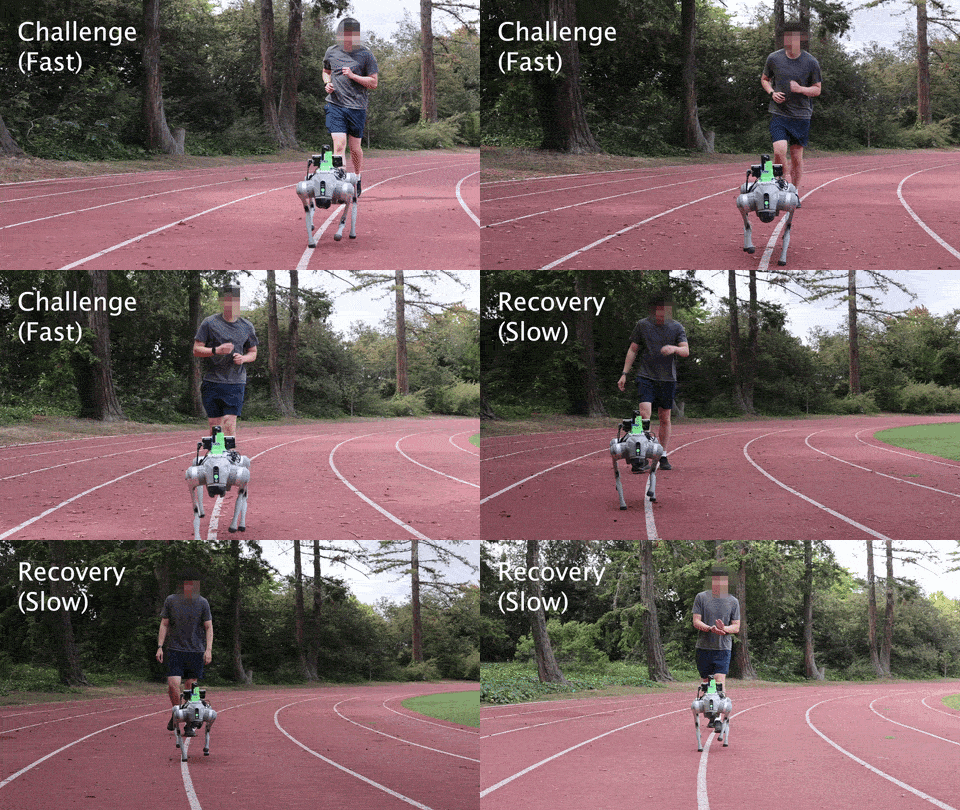
Will People Enjoy a Robot Trainer? A Case Study with Snoopie the Pacerbot
International Conference on Robotics and Automation (ICRA) 2026
Simple & Short: The physical embodiment of a robot quadruped makes it good for natural human-robot interactions, including being a personal running trainer.


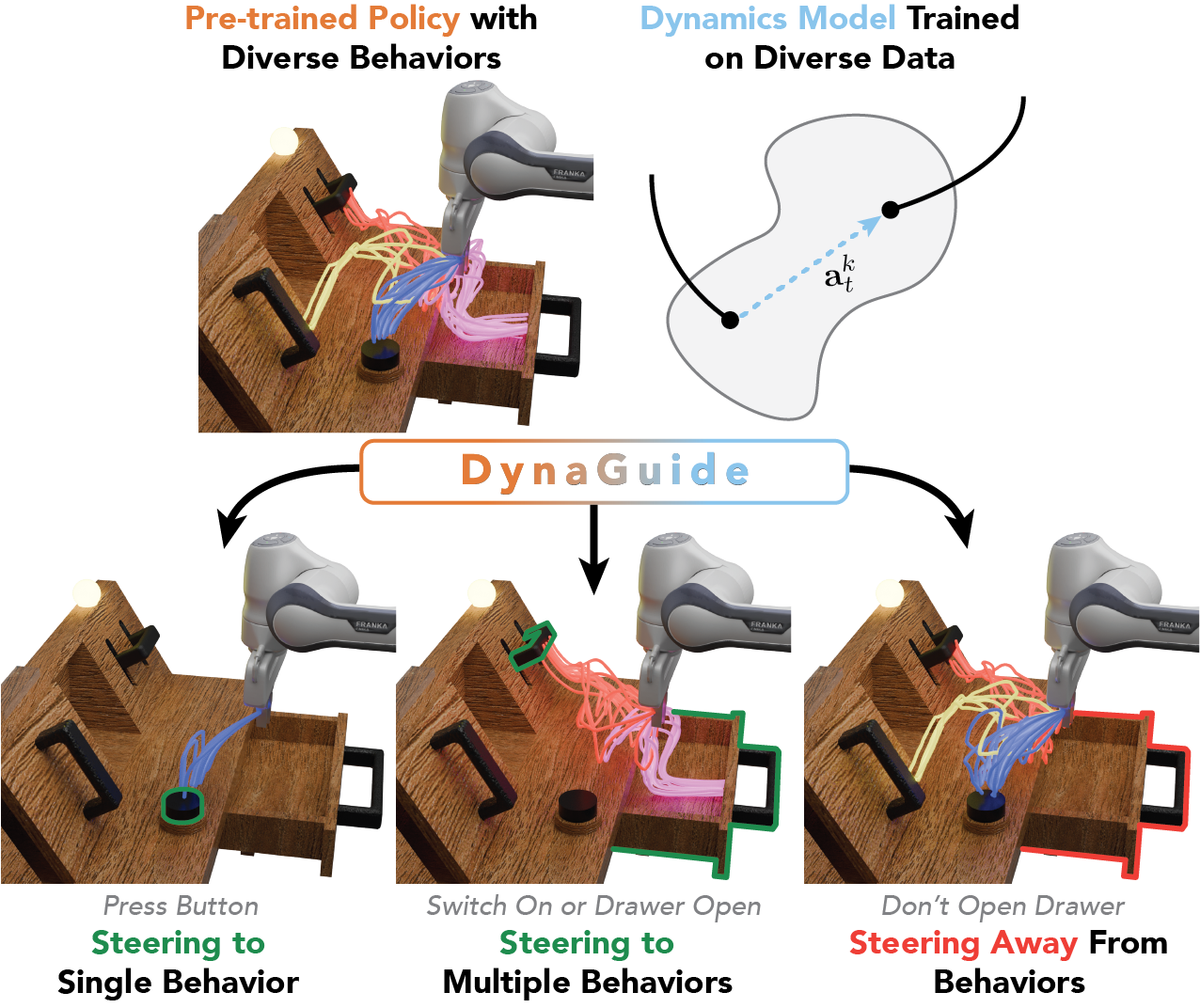
DynaGuide: Steering Diffusion Polices with Active Dynamic Guidance
Neural Information Processing Systems (NeurIPS) 2025
Simple & Short: We can steer the behavior of a trained robot policy by influencing its action generation process with signals from a model that predicts future outcomes.

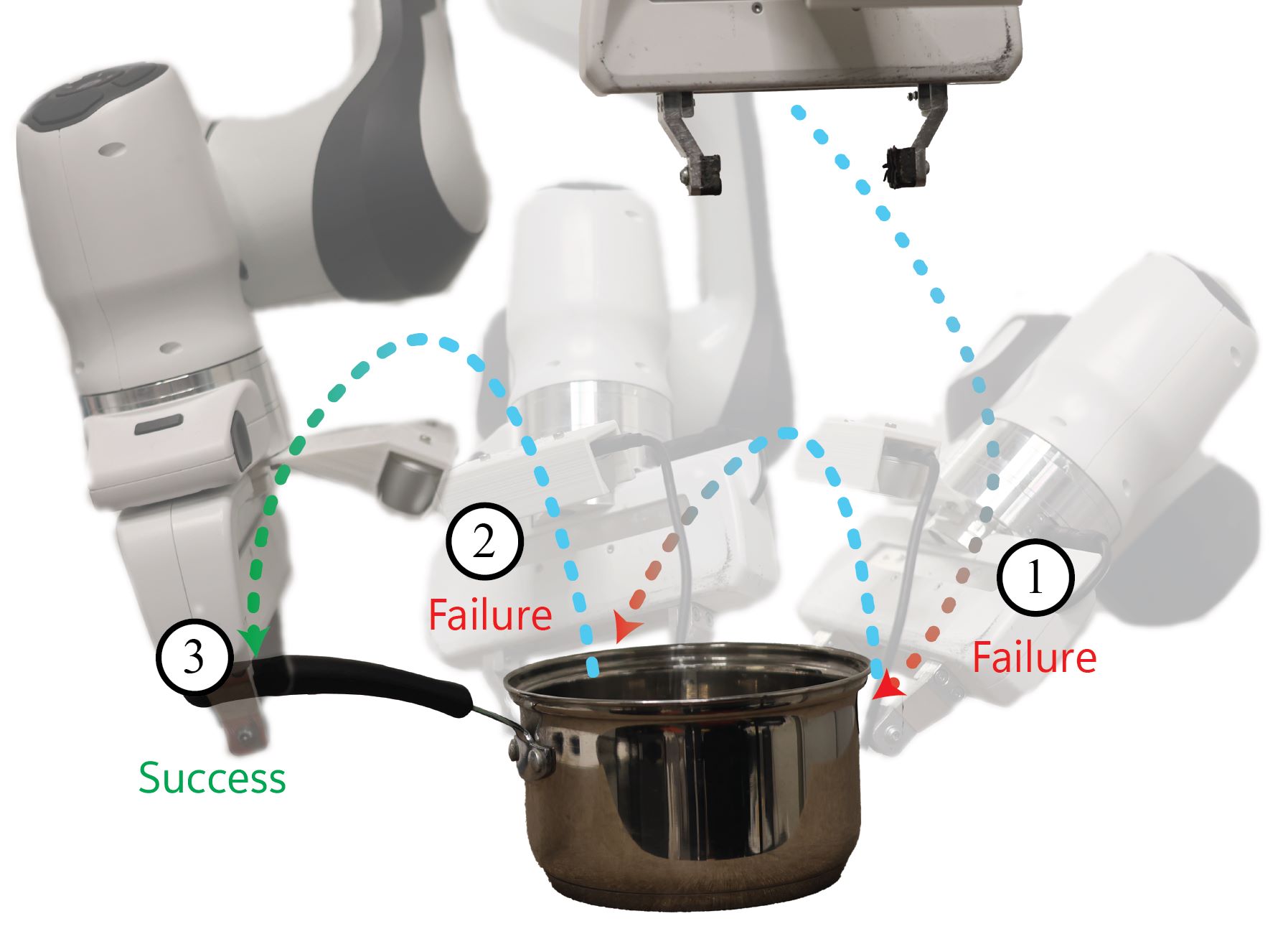
To Err is Robotic: Rapid Value-Based Trial-and-Error during Deployment
Simple & Short: We make a failure detector for robots that allow them to detect mistakes and try something else.
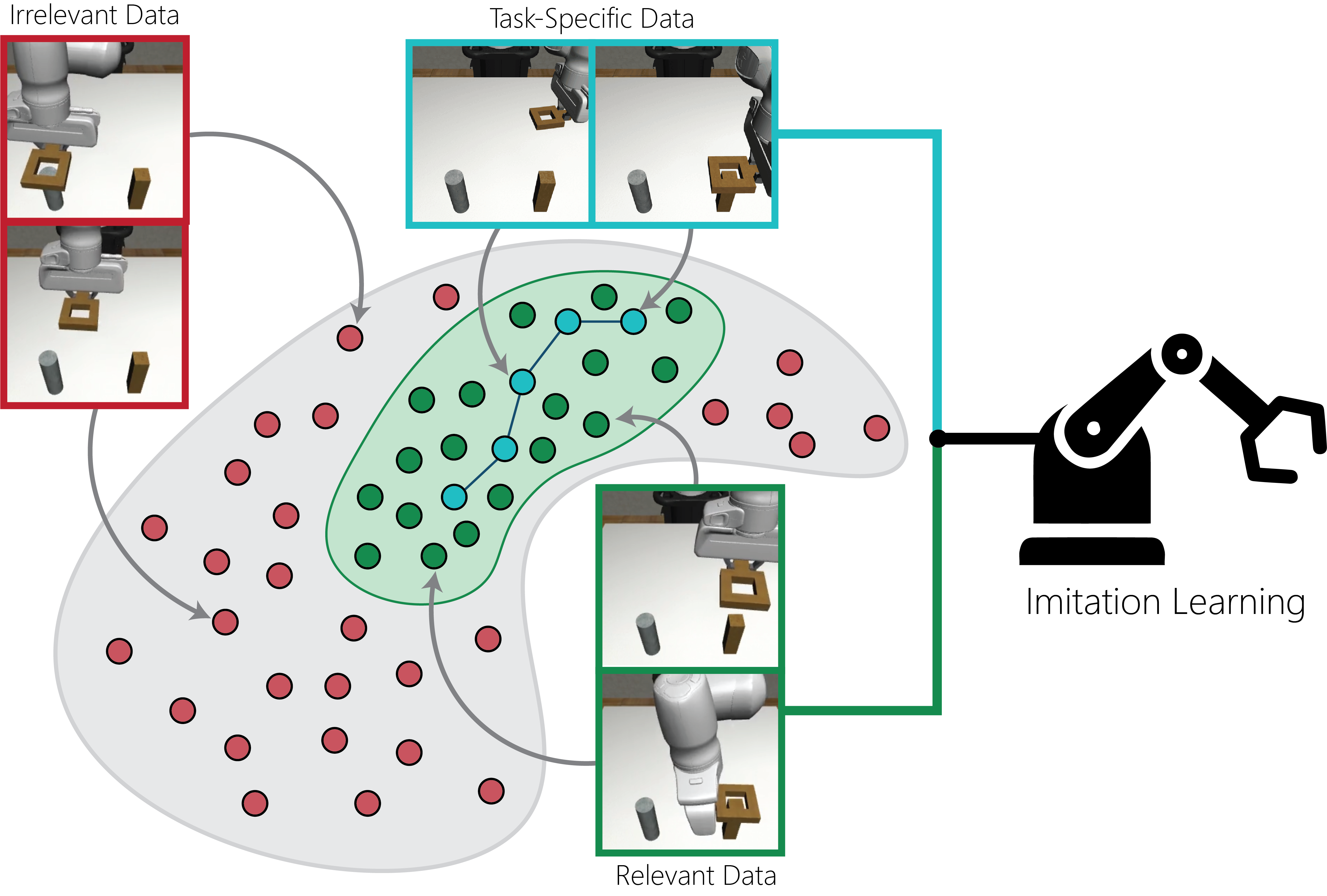
Behavior Retrieval: Few-Shot Imitation Learning by Querying Unlabeled Datasets
Robotics: Science and Systems 2023
Simple & Short: We create a data filtering approach that allows a new robot task to take advantage of old robot data.
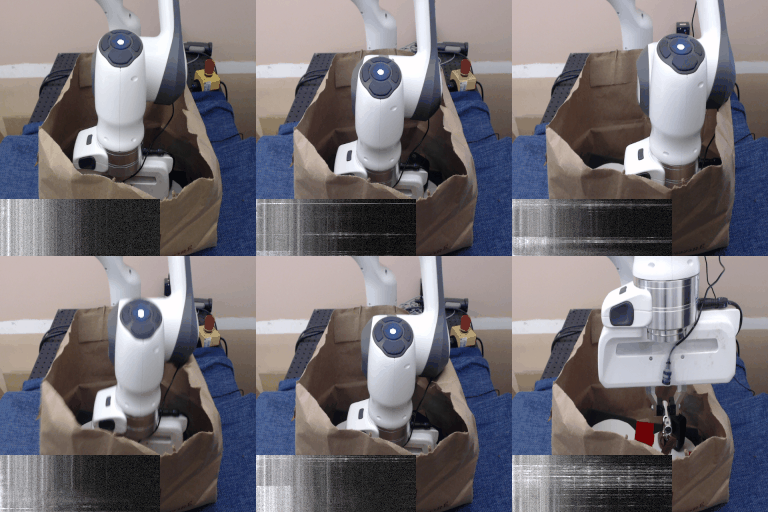
Play it by Ear: Learning Skills amidst Occlusion through Audio-Visual Imitation Learning
Robotics: Science and Systems 2022
Simple & Short: We add a microphone to a robot gripper, allowing it to manipulate objects in confined spaces.